

Direct answer: The main electrical wire types used in the Philippine market include THHN or THHN/THWN-2, THW, Royal Cord and NM cable. THHN/THWN-2 and THW are single conductors normally installed in an approved conduit or raceway. Royal Cord is a flexible multi-core cord for portable or movable connections when its exact cord designation permits the use. NM cable is a sheathed cable assembly for fixed wiring in locations allowed by its marking and the project rules. Wire size for house wiring in the Philippines cannot be selected from the appliance name alone. The designer must check the load, wiring method, temperature, conductor grouping, voltage drop, terminal rating, protection and applicable code.
Electrical wire buyers in the Philippines often work with two sizing languages. Local schedules and supplier catalogs may use square millimetres, while imported equipment and North American drawings may use AWG. The product names can be confusing too. THHN, THW, Royal Cord and NM cable may all appear under the general heading of “electrical wire,” but they are not built for the same wiring method.
A purchase description should state the exact wire or cable type, conductor size, construction, voltage and temperature ratings, certification route and installation conditions. Color, gauge or a retail name alone is not enough for a reliable quotation.
Electrical wire standards used in the Philippine market
The Philippine market includes locally certified wires, imported products intended for Philippine distribution and cables ordered to a project-specific international standard. The RFQ should state which route applies instead of using a general phrase such as “PEC compliant.”
Product standards and installation rules have different jobs. A Philippine National Standard defines product requirements within its scope. The Philippine Electrical Code, the approved electrical design and the authority having jurisdiction govern how that product is selected and installed. Product certification does not approve a circuit design.
DTI-BPS identifies PNS 35:2021 for thermoplastic-insulated copper wires and cables rated 600 V. Its stated coverage includes TW, THW, THHN, THWN, THWN-2 and NM constructions. PNS 163:2018 covers PVC-insulated flexible cords and fixture wires rated up to 600 V, including flat, oval, round and extra-hard-service cord types.
Products within the mandatory certification scope must follow the applicable Philippine Standard certification or Import Commodity Clearance requirements before distribution. For wires, cables and flat cords, the PS mark or ICC sticker may be placed on the packaging when direct application to the product is impractical. Buyers should inspect the wire legend and the coil, reel or carton label.
A project may also specify UL, ASTM or IEC requirements. These references are not interchangeable with a PNS designation. If the tender lists more than one standard, clarify whether dual certification is required or whether the listed standards are alternatives.
Types of electrical wire in the Philippines and their uses
Choose the wiring method first. Then confirm that the complete printed designation covers the installation environment.
| Wire or cable type | Basic construction | Typical use | Main boundary to check |
|---|---|---|---|
| THHN or THHN/THWN-2 | Single copper conductor with thermoplastic insulation and nylon covering | Feeders, branch circuits, panels and equipment connections in approved conduit or raceway | THHN alone is a dry-location designation. Verify THWN or THWN-2 for wet locations. The marking alone does not approve direct burial. |
| THW | Single solid or stranded copper conductor with thermoplastic insulation | General building-wire circuits in an approved wiring method | Confirm the complete temperature, moisture and standard marking. Do not assume it has the same dimensions or ratings as THHN. |
| Royal Cord | Fine-stranded insulated cores with an outer flexible sheath | Portable equipment leads, extension assemblies and movable connections when the cord type permits | “Royal Cord” is a market name, not a complete specification. Confirm the recognized cord type, duty level and environmental ratings. |
| NM cable | Multiple insulated conductors, grounding conductor where specified, fillers or separators and a non-metallic sheath | Fixed wiring as a complete cable assembly where local rules and the product marking permit | Standard NM or NM-B should not be treated as wet-location, outdoor or direct-burial cable. |
These products should not be substituted only because they have the same conductor size. A project that calls for individual conductors in conduit should not receive a flexible cord or NM cable as a price-based alternative. A portable equipment lead should not receive stiff building wire merely because the nominal area looks similar.
THHN and THHN/THWN-2 wire
THHN wire is a single-conductor building wire with thermoplastic insulation and a nylon covering. It is commonly supplied with a solid or stranded copper conductor and pulled through conduit, raceway or wireway.
Standalone THHN identifies a 90°C dry-location construction. Many current products carry a dual THHN/THWN-2 marking. The THWN-2 part provides a 90°C wet- and dry-location designation. If wet-location suitability matters, do not shorten the purchasing requirement to “THHN.”
Typical uses include protected conductors for feeders, branch circuits, panels and equipment connections. The application still depends on conductor size, wiring method, terminal ratings, overcurrent protection and local approval. THHN or THWN-2 marking by itself does not approve direct burial, repeated flexing or every type of exposed outdoor installation.
For a detailed application comparison, read the THHN vs THWN-2 wire guide. For construction, scope, certification and buyer checks, use the UL 83 THHN/THWN-2 guide.
THW wire
THW wire is also a single-conductor thermoplastic building wire. It does not have the nylon covering identified by the N in THHN or THWN. Depending on the approved construction, it may use a solid or stranded copper conductor.
THW is specified where a thermoplastic, heat- and moisture-resistant conductor is required. Its permitted temperature and location must come from the applicable standard, product certificate, data sheet and surface marking.
THW and THHN can look similar on a quotation because both may be described as 600 V copper building wire. They are not automatic substitutes. Insulation construction, finished diameter, conduit pulling behavior, marking, certification and permitted environments can differ.
Royal Cord cable
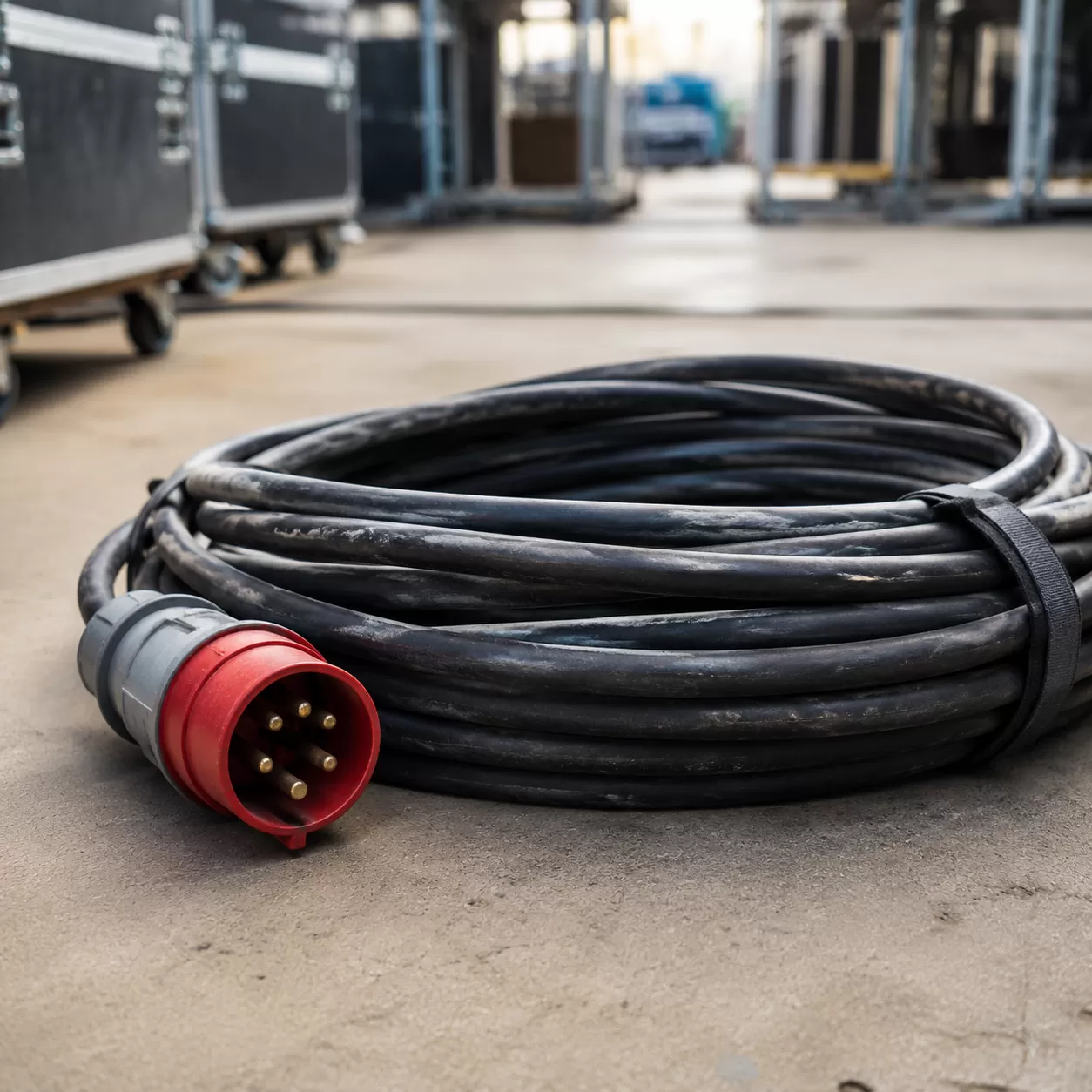
“Royal Cord” is a common Philippine market name for flexible multi-core cord. It is not a complete technical designation. An RFQ should identify the recognized cord type, conductor count, nominal size, voltage, temperature, sheath material and required environmental ratings.
A typical Royal Cord cable uses fine-stranded copper conductors, individual core insulation and an outer flexible sheath. The exact compound may be PVC, rubber or another material defined by the cord specification. This type of construction can suit portable equipment leads, extension assemblies and connections that need movement.
Duty level matters. The product may be a flat cord, light-duty round cord, junior hard-service cord, hard-service cord or another recognized construction. The words “Royal Cord” do not tell the buyer which of these is being offered.
Royal Cord vs THHN: summary
Royal Cord is normally a flexible, sheathed, multi-core cord for portable or movable connections. THHN is a single nylon-covered building-wire conductor normally installed in an approved conduit or raceway.
Royal Cord should not replace THHN in fixed conduit wiring merely because it is flexible. THHN should not replace a cord where repeated movement is expected.
Read the separate Royal Cord vs THHN comparison for a detailed review of construction, flexibility, wiring methods and purchasing requirements.
NM cable
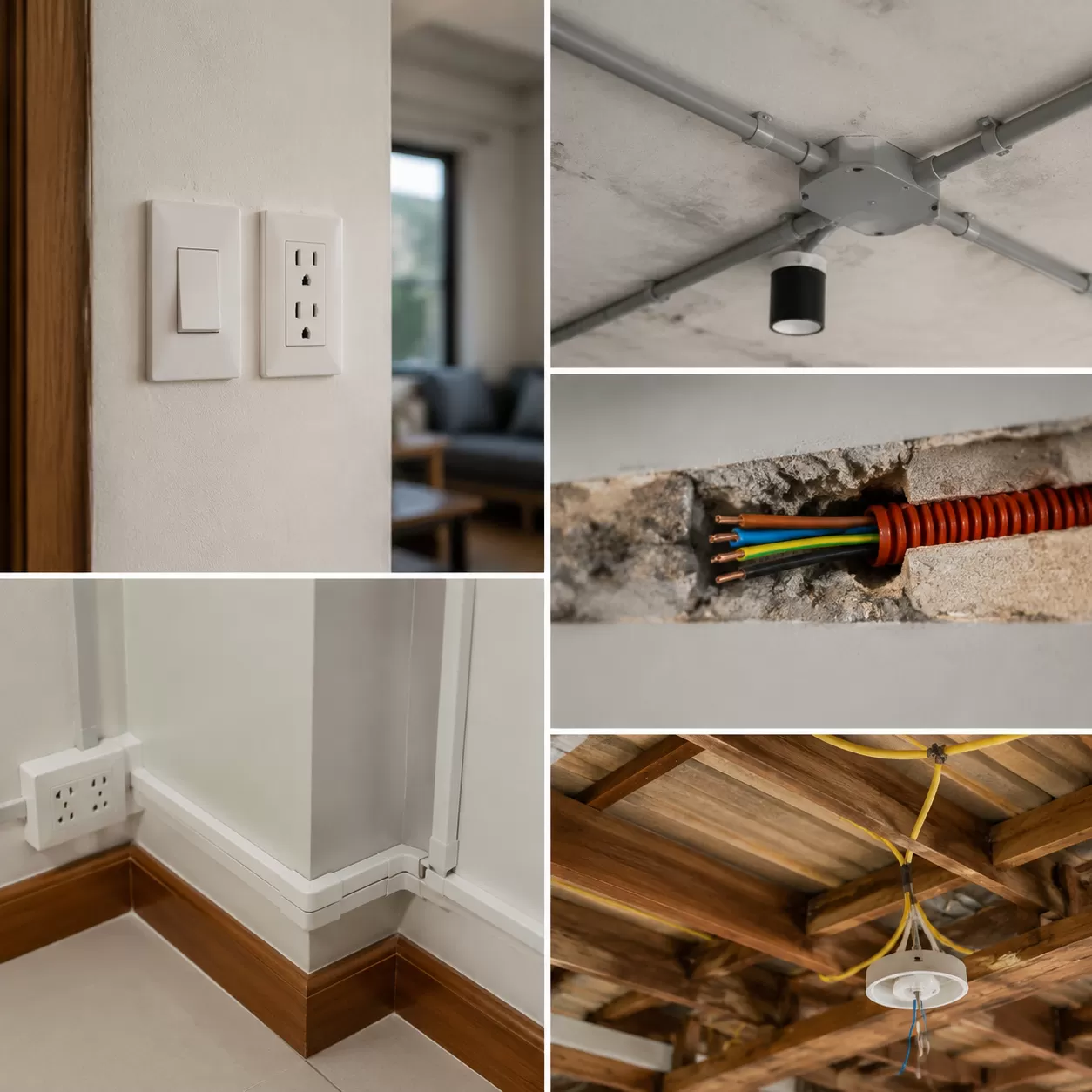
NM cable for the Philippine market combines multiple insulated conductors, a grounding conductor where specified, separators or fillers and a non-metallic outer sheath. It is a complete cable assembly, not a group of individual THHN conductors.
NM cable can simplify fixed wiring in normally dry interior spaces where its construction and local rules permit the wiring method. Standard NM or NM-B cable should not be assumed suitable for wet locations, direct burial or exposed outdoor installation. A PVC jacket alone does not establish those ratings.
The RFQ should state the conductor size, number of insulated conductors, grounding conductor, voltage, temperature rating, sheath color, print legend and governing standard. A request for “12/2 NM” should also confirm whether the construction includes a grounding conductor.
For North American Type NM-B, see the NM-B cable construction and buyer guide.
THHN wire sizes table Philippines: mm² and AWG explained
Philippine cable schedules and catalogs may show metric conductor area in mm² alongside American Wire Gauge. These are different sizing systems:
- mm² states a nominal conductor cross-sectional area.
- AWG is a gauge system in which a smaller gauge number identifies a larger conductor.
An AWG size has a defined geometric area. Common Philippine commercial mm² labels may use rounded values associated with familiar AWG sizes. Treat the following entries as purchasing cross-references, not exact conversions or proof that two conductors are identical.
| Common Philippine market size | Common AWG reference | Defined AWG area | Purchasing note |
|---|---|---|---|
| 2.0 mm² | 14 AWG | 2.08 mm² | Close commercial reference, not an exact conversion |
| 3.5 mm² | 12 AWG | 3.31 mm² | Order the size stated in the approved standard and drawing |
| 5.5 mm² | 10 AWG | 5.26 mm² | Do not substitute only because both appear in one catalog row |
| 8.0 mm² | 8 AWG | 8.37 mm² | Check conductor resistance and dimensional requirements |
| 14 mm² | 6 AWG | 13.30 mm² | Use the ordered designation on the test report and marking |
| 22 mm² | 4 AWG | 21.15 mm² | Confirm the terminal range, accessories and certification scope |
IEC-based projects may instead use nominal sizes such as 1.5, 2.5, 4, 6, 10, 16 and 25 mm². Distributors that handle PNS, UL/AWG and IEC products should keep those descriptions separate in stock records, test reports and quotations.
Conductor standards may also classify a conductor as solid, stranded or flexible. Equal nominal area does not mean equal strand count, finished diameter or flexibility.
Why this is not a universal ampacity table
There is no single safe current value for every wire size or every house-wiring circuit. Allowable ampacity and final conductor selection can change with:
- Conductor material and construction
- Insulation temperature rating
- Equipment terminal temperature limits
- Ambient temperature
- Number of current-carrying conductors grouped together
- Installation in conduit, cable, tray, free air or another wiring method
- Protective-device requirements
- Run length and permitted voltage drop
- Motor starting current, duty cycle and harmonic content
- Short-circuit withstand requirements
- Electrical code, project specification and authority having jurisdiction
A supplier table should not claim that one mm² or AWG size is universally suitable for a fixed current or named appliance. The electrical designer should calculate the circuit and issue the approved cable schedule.
How to select wire size for house wiring in the Philippines
Start with circuit data, not a room name or appliance label.
- Record system voltage, phase, frequency and design load. For equipment, include the nameplate current and any manufacturer-specified minimum circuit ampacity or maximum overcurrent protection.
- Define the wiring method and route. State whether conductors will be in conduit, in a sheathed cable, underground, outdoors, exposed to water or grouped with other circuits.
- Select a wire or cable type whose full printed designation covers that environment and wiring method.
- Calculate conductor size using the applicable code tables, adjustment factors, voltage-drop limit and short-circuit requirements.
- Check breaker or fuse coordination, terminal temperature ratings, lug range and cable outside diameter.
- Put the approved type, size, color and installation notes into the purchase specification.
For an air-conditioning circuit, provide the equipment nameplate, voltage, phase, route length, wiring method, ambient conditions and approved conductor requirement. Horsepower by itself is not enough to determine a wire size.
Wire markings and package labels to check
The cable legend connects the approved specification to the delivered product. Depending on the product and standard, check:
- Manufacturer name or registered trademark
- Full wire or cable type, such as THHN/THWN-2, THW, NM or the recognized flexible-cord designation
- Conductor material
- Nominal size in mm², AWG or kcmil
- Number of cores and grounding conductor where applicable
- Voltage rating
- Temperature and dry- or wet-location rating
- Governing product standard
- Certification mark, license or file reference where required
- Optional claims such as sunlight, oil, flame or direct-burial resistance only when supported by certification
- Lot, date or traceability code
- Sequential length marking when required by the order
The print order varies by standard. Approve a sample legend before production, and make sure each claim matches the certification scope. The cable jacket markings guide explains how to review these fields.
For Philippine distribution, inspect the coil, reel or carton as well as the wire surface. A supplier logo printed on the insulation does not replace required certification evidence.
B2B purchasing and RFQ checklist
A complete RFQ makes quotations easier to compare and reduces substitutions after sample approval.
Project and compliance
- Destination market and delivery port
- End use: distribution stock, residential, commercial, industrial, infrastructure, OEM equipment or temporary power
- Governing standard and edition
- Philippine certification route: PS, ICC or another project-approved arrangement
- Required third-party certification, file or license number
- Consultant, customer or authority approval requirements
Conductor and size
- Copper or aluminium
- Bare or tinned conductor
- Solid, stranded or flexible construction
- Nominal size in mm², AWG or kcmil
- Strand count and strand diameter where controlled
- Maximum DC conductor resistance at the stated reference temperature
Insulation and cable construction
- Exact product type: THHN/THWN-2, THW, NM or recognized flexible-cord designation
- Number of insulated conductors and grounding conductor
- Insulation and sheath materials
- Voltage and temperature ratings
- Dry-, wet- or other location rating
- Required colors
- Minimum insulation or sheath thickness
- Maximum finished diameter when installation hardware is fixed
- Sunlight, oil, flame, wet-location or direct-burial requirements where applicable
Marking and packaging
- Exact surface print legend
- Brand or private-label artwork
- Sequential metre marking
- Coil, spool, reel or drum packaging
- Length per package and permitted length tolerance
- Reel dimensions, maximum gross weight and pallet limits
- Inner label, carton label and shipping marks
- PS mark, ICC sticker or other certification-label placement
Quality documents and inspection
- Technical data sheet
- Certificate of conformity and applicable certification record
- Type-test report and batch test report
- Conductor resistance, spark test and dimensional results
- Material declarations where required
- Pre-production sample and golden-sample approval
- Final inspection plan and acceptance criteria
- Third-party inspection when required
For larger or private-label orders, use the electrical cable factory inspection checklist to define sampling, test records, packaging checks and shipment controls before production begins.
Commercial information
- Quantity by type, size and color
- Trial-order quantity and annual forecast
- Target delivery date
- Incoterm and destination port
- Quotation currency and validity
- Sample and production lead times
- Warranty, claim and replacement terms
A request such as “3.5 mm² Royal Cord, best price” leaves the cord type, core count, voltage, jacket, certification, package length and order quantity undefined. Those missing fields often explain large price differences between offers.
Frequently asked questions
What is the standard wire size in the Philippines?
There is no single standard wire size for every circuit. Philippine-market building wires are sold in several nominal sizes, and drawings may use mm² or AWG. The designer selects the size after checking load, wiring method, temperature, grouping, voltage drop, protection and local requirements.
Are 3.5 mm² and 12 AWG the same size?
They are commonly cross-referenced in Philippine trade, but they are not mathematically identical. The defined area of 12 AWG is about 3.31 mm². Order the designation required by the drawing and standard, then verify conductor resistance and dimensional requirements.
Can THHN wire be used in a wet conduit?
Standalone THHN does not establish wet-location suitability. If the conduit is classified as a wet location, specify and verify a complete wet-rated designation such as THWN or THWN-2, subject to the approved wiring method and local rules.
Is Royal Cord suitable for permanent house wiring?
The market name “Royal Cord” does not establish an approved use. Flexible cord is normally selected for portable, movable or equipment-connection applications according to its recognized type. Do not use it as a substitute for fixed building wiring unless the exact construction and installation method are approved.
Can NM cable be installed outdoors or underground?
Standard NM or NM-B cable is intended for normally dry locations. Do not treat it as outdoor, wet-location or direct-burial cable unless a different recognized designation and marking specifically provide those ratings.
What wire size should be used for a split-type air conditioner?
The answer depends on the equipment nameplate and installation. Provide voltage, phase, nameplate current, manufacturer instructions, route length, wiring method, ambient temperature, conductor grouping and protective-device data to the electrical designer. A universal size based only on horsepower is not reliable.
Request a Philippine cable quotation
KingForYou Cable supplies THHN/THWN-2, THW, Royal Cord, NM cable and other electrical wire constructions for distributors, contractors, EPC companies and OEM buyers.
Send the required standard, wire type, conductor size, color, quantity, print legend, certification, packaging and destination. For a project order, attach the cable schedule or marked-up specification so the quotation can follow the approved design.
View Philippine cable specifications and submit your inquiry


