

The unique demands of the Canadian climate and strict Canadian Electrical Code (CEC) regulations mean your project’s success depends entirely on selecting the right building wire.
Get it wrong, and you are looking at failed inspections, code violations, and blown project budgets.
For procurement managers and electrical contractors, the confusion usually boils down to two heavyweights: NMD90 and T90. Both carry a 90°C temperature rating, but substituting one for the other is a costly mistake. They serve completely different structural roles.
At Kingforyoucable, we supply bulk building wire to projects across Canada, and we see buyers stall on this decision every day.
Here is the exact breakdown of when to deploy a multi-conductor non-metallic dry cable versus a slick, single-conductor thermoplastic nylon wire, so you can keep your project moving and your procurement on budget.
What is NMD90 Cable?
If you are tackling a residential wiring project in Canada, NMD90 cable is the backbone of your electrical system. Standing for Non-Metallic Dry 90°C, this specialized Canadian building wire is designed specifically for reliable indoor power distribution.
Core Construction and Features
We manufacture our NMD90 cable to withstand standard residential demands while ensuring compliance with the Canadian Electrical Code (CEC).
- Copper Conductors: The cable contains two or three bare copper conductor sizes insulated with polyvinyl chloride (PVC) and a bare grounding wire.
- PVC Insulation Jacket: A smooth, durable PVC insulation jacket encases the inner conductors, reducing wire pulling friction through wood studs.
- Temperature Rating: Rated for 90°C (194°F), which optimizes its allowable ampacity during peak electrical loads.
Primary Applications
NMD90 is the go-to residential electrical wiring solution across Canada. It functions as the primary Romex alternative Canada contractors rely on for indoor branch circuits. You will use it for:
- Outlets and light fixtures
- Switches and ceiling fans
- Major household appliances, including stoves, dryers, and heaters
Key Limitations
While highly versatile, NMD90 has strict installation boundaries. It is rated exclusively for dry and damp locations inside a structure.
Important Restriction: You cannot use NMD90 cable in wet environments, exposed outdoor runs, or direct burial applications. Exposing the non-metallic dry cable to continuous moisture or embedding it directly in concrete violates safety standards and compromises the insulation.
What is T90 Cable (Wire)?
When you are sourcing Canadian building wire for high-performance environments, T90 nylon cable is a staple product in our inventory. The acronym stands for Thermoplastic 90°C, which tells you exactly what it’s made of and its maximum temperature rating under continuous load. Unlike multi-conductor bundles, T90 is a single-conductor thermoplastic nylon wire engineered for durability and smooth routing.
Construction and Applications
Our T90 wire features a solid or stranded copper conductor wrapped in a tough PVC insulation jacket, topped with a slick nylon outer sheath. This nylon layer is critical because it significantly reduces wire pulling friction when feeding the wire through tight spaces.
This specialized construction makes T90 the go-to choice for specific setups:
- Conduit Installation: Must be pulled through raceways, Electrical Metallic Tubing (EMT), or flexible conduits.
- Commercial and Industrial: Perfect for commercial building wire networks, industrial warehouses, and control panels.
- Residential Use: Ideal for feeding power to heavy appliances like pumps or HVAC units via protective conduit.
Key Limitations
While T90 is a highly versatile 600V building wire, it has strict installation limits defined by the Canadian Electrical Code (CEC):
- No Exposed Wiring: T90 cannot be run openly behind drywall or fastened directly to wood framing like a non-metallic dry cable.
- Mandatory Raceways: It lacks an integrated outer protective armor, meaning it absolutely requires a conduit or raceway for physical protection.
- Dry and Damp Locations Only: T90 is rated for dry and damp environments but is not suitable for direct burial or permanently wet locations.
Head-to-Head Comparison: NMD90 vs. T90 Cable
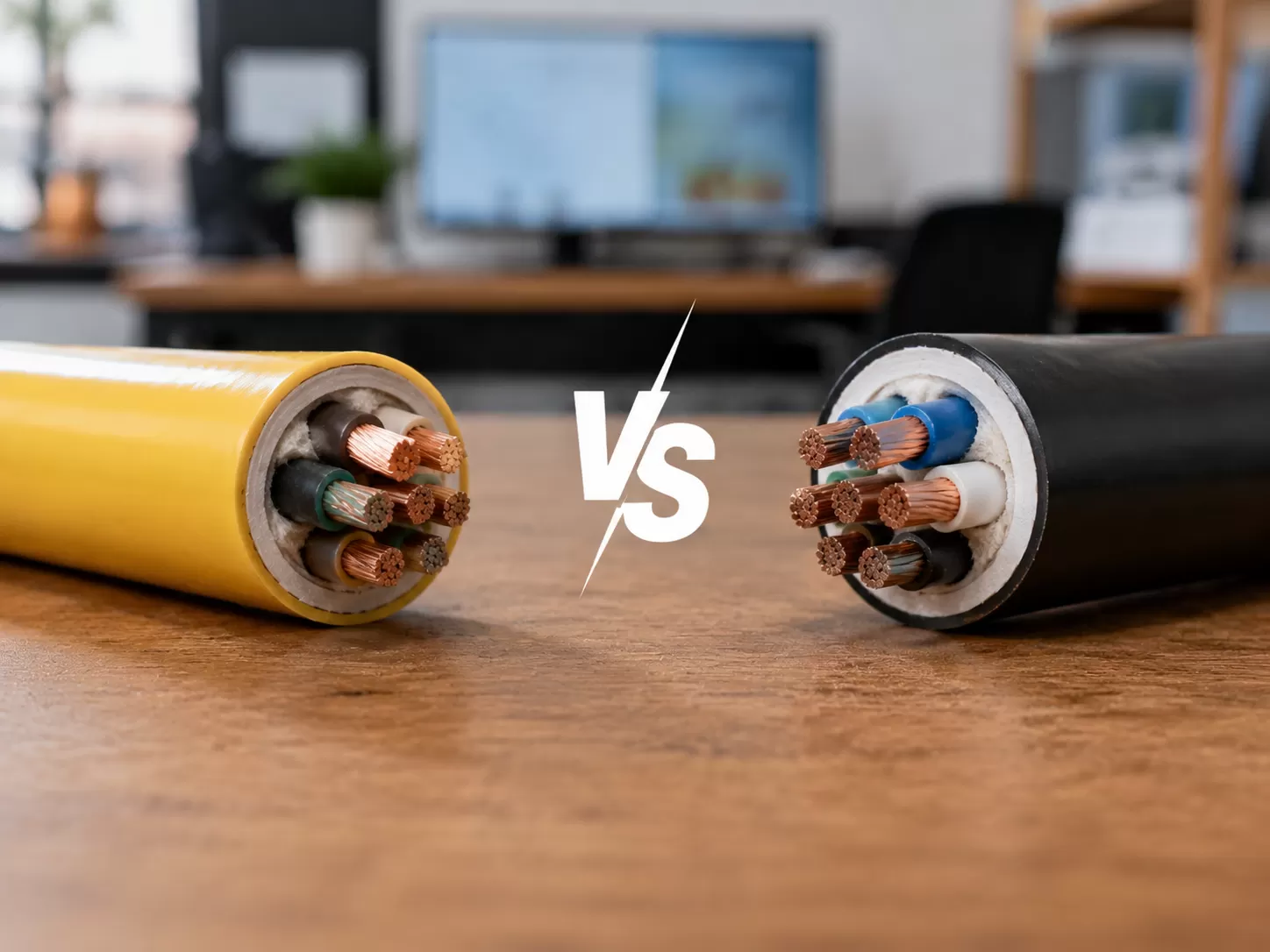
When sourcing Canadian building wire, understanding the stark mechanical and electrical differences between NMD90 cable and T90 nylon cable ensures code compliance and prevents costly field failures. While both carry a 90°C temperature rating, they serve completely different structural roles.
| Feature | NMD90 Cable | T90 Nylon Cable |
|---|---|---|
| Structural Form | Multi-conductor flat assembly with a PVC jacket | Single-conductor solid or stranded wire |
| Voltage Rating | Maximum 300V limits | Up to 600V building wire limits |
| Outer Sheath | Bare PVC insulation jacket | Tough, slick nylon outer sheath |
| Installation Method | Direct stapling through wood framing | Manual conduit pulling or raceway feeding |
| Primary Environment | Residential dry and damp interior locations | Commercial infrastructure and industrial runs |
Structural Form and Voltage Ratings
The most immediate difference is how these wires are built. NMD90 cable is an all-in-one package containing multiple copper conductors wrapped together inside a single flat PVC jacket. It is strictly built for lower-voltage applications, topping out at 300V limits.
Conversely, T90 nylon cable is a single-conductor building wire. It features a slick nylon jacket over thermoplastic insulation, allowing it to handle up to 600V building wire loads.
Installation Methods and Environments
Installation practices dictate which wire to stock for the job site:
- NMD90 Cable: Designed for fast, direct stapling through holes bored in wood framing. Because it cannot withstand heavy physical abuse, it is restricted to residential electrical wiring behind drywall in dry and damp locations only.
- T90 Nylon Cable: Built specifically for conduit installation. The slick nylon sheath reduces wire pulling friction, letting crews pull multiple single conductors through electrical metallic tubing (EMT) or rigid raceways. This durability makes it the standard choice for concrete runs, commercial building wire layouts, and industrial warehouses where open wiring is prohibited.
Buyer’s Decision Matrix: NMD90 vs T90 Cable
Choosing between NMD90 and T90 nylon cable comes down to your specific project environment and code requirements. Here is how to map out your purchase for the Canadian building wire market.
Scenario A: Residential Wood-Frame Construction & Renovations
If you are roughing out a house, fixing up a basement, or handling light residential electrical wiring, NMD90 cable is your go-to choice.
- Best Use: Inside dry or damp indoor walls, ceilings, and floor joists.
- Installation: Direct stapling to wood framing without the need for conduit.
- Why It Wins: It saves massive amounts of labor time and reduces material costs for standard home stick-framing.
Scenario B: Commercial Retrofits, Industrial Warehouses & Concrete Runs
For commercial building wire applications where mechanical protection is a priority, T90 wire is the mandatory standard.
- Best Use: Commercial offices, retail spaces, factories, and feeding deep into concrete structures.
- Installation: Must be manually pulled through raceways, EMT, or rigid conduit installation networks.
- Why It Wins: Its tough nylon outer sheath withstands wire pulling friction and offers a higher voltage rating for heavy power loads.
The Wet Location Alternative Warning: NMWU and RW90/RWU90
Neither NMD90 nor T90 nylon cable can handle direct burial or wet locations. If your run goes underground, outdoors, or inside a conduit exposed to the elements, you must switch to a CSA approved building wire rated for wet environments.
| Environment / Application | Correct Cable Choice | Avoid Using |
|---|---|---|
| Underground Direct Burial | NMWU (Non-Metallic Wet Underground) | NMD90 (Will rot/short out) |
| Outdoor / Wet Conduit Pulls | RW90 / RWU90 | T90 (Not rated for standing water) |
Pro Tip: Mixing up dry/damp rated wires with true wet-rated cables is a quick way to fail an inspection. Always check the jacket markings before finalizing your bulk procurement.
Smart Procurement: Bulk Canadian Building Wire Buying Guide

When you’re sourcing electrical bulk procurement orders for the Canadian market, you can’t afford to waste money on substandard materials or shipping delays. Getting the right product means knowing exactly what to look for on the spec sheet before signing off on a bulk order of NMD90 cable or T90 nylon cable.
CSA Approved Building Wire Compliance
Never buy unverified wire. Every spool of Canadian building wire must carry explicit Canadian Standards Association (CSA) certification marks.
- The Law: The Canadian Electrical Code (CEC) strictly mandates the use of CSA approved building wire.
- The Risk: Using non-compliant wire risks failed inspections, costly tear-outs, and voided insurance policies.
- The Check: Inspect the PVC insulation jacket for clearly printed CSA file numbers and temperature ratings before accepting a shipment.
Jacket Color-Coding Standards
Canadian residential electrical wiring relies on a strict, standardized color-coding system for different copper conductor sizes. This allows inspectors and installers to verify the wire gauge at a single glance.
| Wire Gauge | Jacket Color | Common Application |
|---|---|---|
| 14 AWG | White | 15-amp indoor branch circuits, lighting and outlets |
| 12 AWG | Yellow | 20-amp kitchen counters and dedicated receptacles |
| 10 AWG | Orange | 30-amp heavy appliances, dryers and air conditioners |
Note: While NMD90 follows this color scheme for easy identification, T90 single conductors use standard solid colors, including black, red, blue, white, and green, depending on their phase or grounding function in a conduit installation.
Quality Metrics for Fast-Paced Pulls
Time is money on a job site. Low-quality wire slows down installations and increases scrap rates. Look for these manufacturing metrics to ensure smooth, profitable deployments:
- Low Wire Pulling Friction: High-grade T90 nylon cable features a slick outer sheath that glides through bends without binding or requiring excessive pulling lubricant.
- Jacket Pliability: Quality non-metallic dry cable balances toughness with flexibility. It should strip cleanly without nicking the inner copper conductors, even in colder Canadian weather.
- Reel Integrity: Ensure your supplier uses sturdy, weather-resistant reels. Flimsy spools collapse during payout, causing knots, tangles, and wasted labor hours on the floor.
For bulk orders, custom specifications, or project-based cable sourcing, you can contact Kingforyoucable to confirm the suitable cable type, voltage rating, conductor size, and packaging requirements before procurement.
Frequently Asked Questions About NMD90 and T90
Can I run NMD90 inside an underground conduit?
No. NMD90 is strictly rated for dry or damp interior locations. Even inside a sealed underground conduit, moisture accumulates over time. For underground installations, you must use NMWU or RW90 cables, which are specifically engineered to withstand continuous water exposure and prevent insulation breakdown.
Is T90 wire suitable for open wiring behind drywall?
No, you cannot run T90 wire open behind drywall. T90 is a single-conductor building wire that lacks an outer protective jacket. The Canadian Electrical Code (CEC) mandates that T90 must always be pulled through an approved raceway, electrical metallic tubing (EMT), or conduit system to protect the conductor from physical damage.
What is the main difference between NMD90 and Romex in Canada?
They are essentially the same product, just using different names. Romex is a brand name, while NMD90 is the generic industry term used for Canadian building wire. Both refer to non-metallic dry cable used for residential indoor branch circuits, featuring a PVC insulation jacket and copper conductors.
How does temperature rating affect allowable ampacity for these wires?
The 90°C temperature rating indicates the maximum heat the conductor insulation can safely handle under full load. While both NMD90 and T90 nylon cable share this high-temperature threshold, your actual allowable ampacity calculations must align with the lowest temperature rating of the connected equipment, circuit breakers, or termination lugs, which are typically limited to 60°C or 75°C.


