

Selecting the wrong house wiring cable can stall a commercial project faster than a failed inspection.
When you are managing tight construction timelines and strict regional compliance, you don’t have time to second-guess your materials. You need to know exactly when to deploy a rigid solid copper core versus a flexible stranded conductor—and which standard fits your jurisdiction.
In this guide, we are going to decode the exact technical differences between four of the industry’s most relied-upon building wires: H07V-U, H07V-K, NYM, and Twin & Earth cable.
From deciphering the HAR harmonized code to choosing between Class 1 vs Class 5 conductor performance for complex grids, we have broken down the engineering specifications every project manager and distributor needs to know.
At Kingforyoucable, we manufacture these exact standards to withstand the toughest structural environments. Let’s dive straight into the technical breakdown.
Building Wire Types Explained: H07V-U, H07V-K, NYM, and Twin & Earth Cable
When you are managing a new construction project or upgrading an industrial facility, choosing the right house wiring cable is the foundation of a safe, code-compliant electrical system. Navigating international designations can be challenging, but understanding these specific building wire types ensures your project stands up to long-term operational demands.
Decoding Single-Core Building Wires: H07V-U vs. H07V-K
Single-core building wire options form the backbone of everyday electrical infrastructure. To select the right option, you must first understand how European and international markets standardize these cables.
Understanding the Harmonized (HAR) Coding Nomenclature
The HAR harmonized code system removes the guesswork from cable specifications. It tells you exactly what a wire can handle based on a strict, universally recognized letter and number sequence.
For our standard 450/750V low voltage wire options, the breakdown is straightforward:
- H: Confirms the cable conforms to harmonized standards.
- 07: Indicates a 450/750V rated voltage capacity.
- V: Specifies PVC insulated building wire.
- -U / -K: Identifies the specific core construction type (Solid vs. Flexible Stranded).
H07V-U Cable: The Rigid Powerhouse
Our H07V-U cable features a single, solid copper core. This Class 1 conductor is built specifically for structural permanence. Because it holds its shape when bent, it is the ideal choice for heavy-duty fixed electrical installation work inside protective runs.
- Best Used For: Conduit and trunking installation inside internal walls, switchboards, and lighting circuits.
- Key Advantage: Excellent structural integrity and long-term stability in static environments.
H07V-K Cable: The Ultra-Flexible Connector
If your project requires routing through tight bends, complex machinery panels, or crowded spaces, our H07V-K cable is the correct choice. This wire relies on a flexible stranded conductor design (Class 5 conductor) that bends effortlessly without fatiguing or cracking the copper.
- Best Used For: Internal wiring of appliances, distribution boxes, and tight control panels.
- Key Advantage: Extreme flexibility that simplifies handling and speeds up installation in cramped enclosures.
Side-by-Side Comparison Matrix
| Technical Specifications | H07V-U Cable | H07V-K Cable |
|---|---|---|
| Conductor Type | Solid copper core (Class 1) | Flexible stranded conductor (Class 5) |
| Insulation Material | PVC insulated building wire | PVC insulated building wire |
| Voltage Rating | 450/750V | 450/750V |
| Flexibility | Rigid / Non-flexible | Highly flexible |
| Primary Application | Fixed electrical installation in conduits | Internal panel and appliance routing |
NYM Cable: The Standard European Multicore Solution
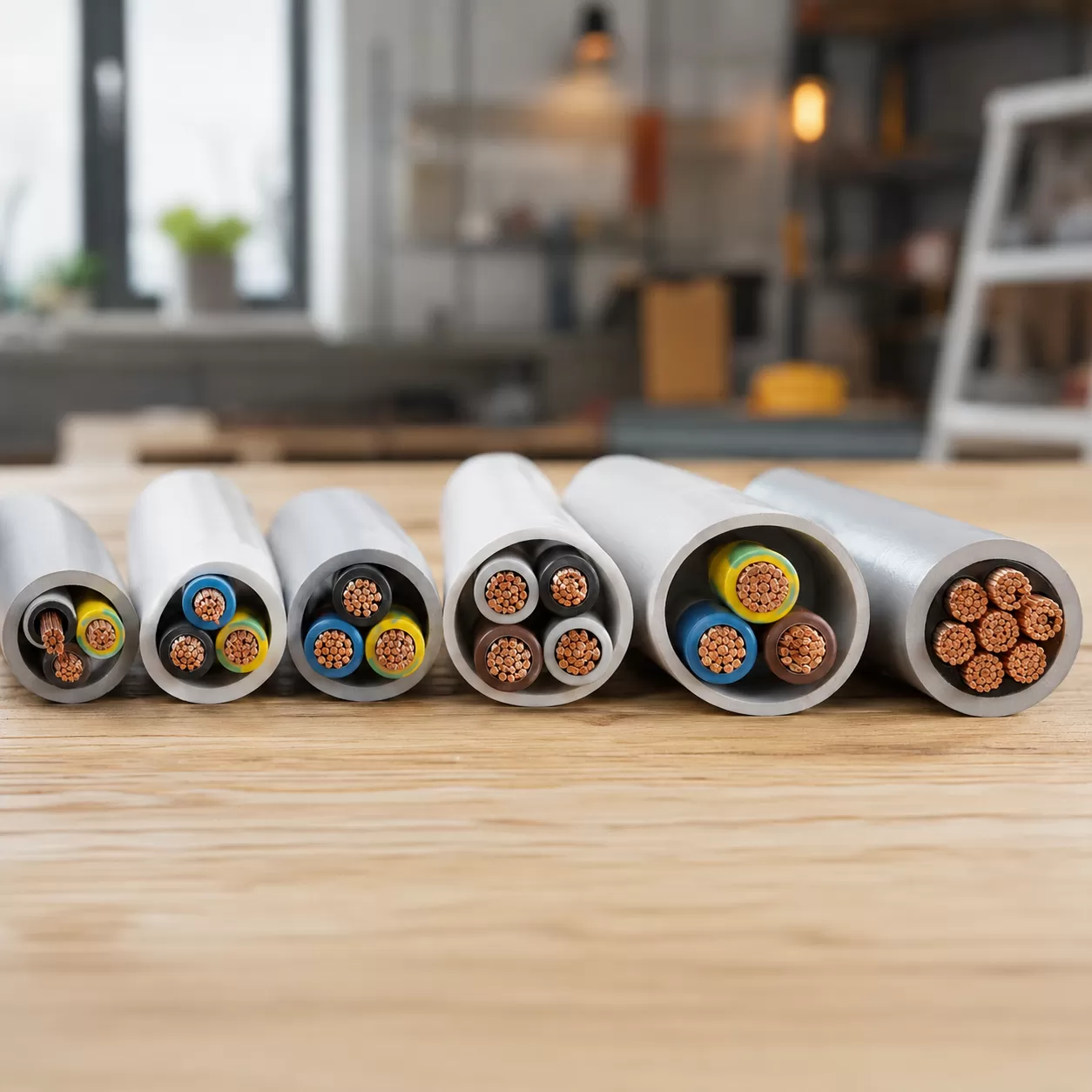
If you are handling large-scale commercial installs or fixed wiring projects, the NYM cable is likely your go-to multicore power cable. Known for its versatility, this cable is designed to streamline installations where multiple conductors need to be routed together efficiently.
Structural Anatomy of an NYM Cable
The “N” stands for standard, “Y” for PVC insulation, and “M” for sheathed cable. Inside, you will find high-quality solid copper cores (Class 1) or stranded conductors (Class 2) for larger sizes.
- Insulation: Individual PVC-insulated cores.
- Filler: A rubber compound filling the gaps between cores to maintain a circular shape.
- Outer Jacket: A tough, moisture-resistant gray PVC sheath that protects the internal wiring.
Installation Environments and VDE Compliance
Our NYM-J power cable is fully VDE certified, meeting strict European safety standards for fixed electrical installations. While it is incredibly durable, it is specifically designed for:
- Dry, damp, or wet rooms: Perfect for laundry areas or basements.
- Masonry and Concrete: It can be laid directly in or under plaster.
- Pro Tip: While moisture-resistant, NYM is not rated for direct burial in the ground without a conduit or for use in vibrating concrete.
Key Advantages for Large-Scale Commercial Projects
For property developers and project managers, NYM cables offer a distinct edge in speed and safety:
- Efficiency: Running one multicore cable is significantly faster than pulling multiple single-core wires through trunking.
- Flame Retardant: Our cables feature self-extinguishing PVC properties to prevent fire spread.
- Standardization: Using VDE-compliant building wire ensures your project meets international insurance and safety benchmarks.
| Feature | NYM Cable Specification |
|---|---|
| Voltage Rating | 300/500V |
| Conductor Type | Solid or Stranded Copper |
| Core Colors | Harmonized (Green/Yellow included in J-type) |
| Common Use | Commercial fixed wiring & house wiring cable |
Twin & Earth (T&E) Cable: The UK Household Standard
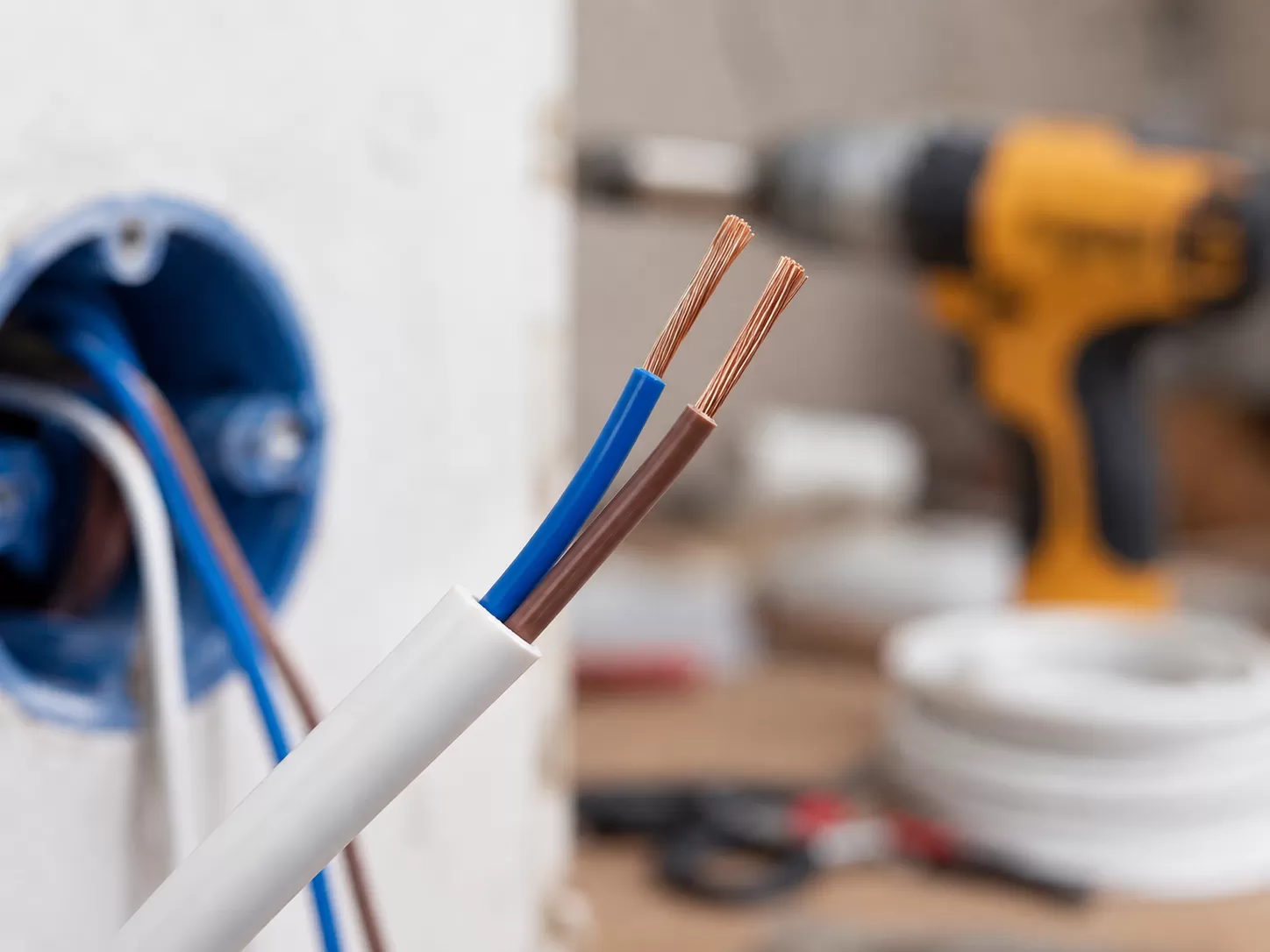
While US contractors typically reach for Romex (NM-B), international projects and specific overseas builds rely heavily on Twin & Earth (T&E) cable. It is the absolute standard for house wiring cable across the UK and many Commonwealth nations. When outfitting these residential properties, our Twin and Earth cable provides a streamlined, flat-profile solution that simplifies fixed electrical installations.
Mechanical Design & Distinct Attributes
The physical structure of T&E is built for quick, clean installations. It features two insulated copper cores (live and neutral) separated by a central bare earth conductor. Everything is encased in a tough, flat PVC outer sheath. This flat profile makes it incredibly easy to route under floorboards, through stud walls, or directly into plaster without creating bulky wall bulges.
Compliance with BS 6004 Standards
Safety and long-term reliability are non-negotiable for any building wire. This PVC insulated building wire is manufactured to strictly meet the BS 6004 standard. This certification guarantees the cable can safely handle 300/500V voltage ratings while providing the necessary fire-retardant properties and insulation integrity required for modern homes.
Typical Domestic Use Cases
T&E is the backbone of residential power distribution. We see it deployed across several standard applications:
- Lighting Circuits: Smaller cross-sections (1.0mm² or 1.5mm²) are the go-to choice for standard residential lighting runs.
- Power Outlets: The 2.5mm² gauge is the industry standard for domestic ring main wiring, easily handling everyday household appliances.
- High-Load Appliances: Thicker gauges ranging from 4.0mm² to 16.0mm² are required to safely power heavy-draw equipment like electric ovens, hobs, and electric showers.
Twin & Earth Cable Quick Specs
| Feature | Specification |
|---|---|
| Cable Type | Flat PVC insulated building wire |
| Conductors | Solid or stranded copper (Live/Neutral) |
| Earth Wire | Uninsulated (Bare earth conductor) |
| Voltage Rating | 300/500V |
| Regulatory Standard | BS 6004 |
Critical Technical Comparison: Choosing Your Cable Type
Choosing between an H07V-U cable, H07V-K cable, NYM cable, or Twin & Earth depends entirely on your specific region, environmental factors, and installation methods. Selecting the wrong building wire can lead to code violations, installation delays, or mechanical failure.
Cross-Regional and Application Assessment
While North American projects frequently rely on standardized options like NMD90 cable for residential builds, international and specialized commercial projects require a deep understanding of European and British standards. For instance, the HAR harmonized code system governs single-core building wire types like H07V-U and H07V-K, ensuring they meet strict low voltage limits (450/750V). Meanwhile, NYM serves as the rigid standard across mainland Europe, and Twin & Earth remains the staple for UK domestic ring main wiring.
| Cable Type | Conductor Class | Primary Region | Best Used For |
|---|---|---|---|
| H07V-U | Class 1 (Solid) | Europe / Global | Conduit and trunking installation, fixed electrical installation |
| H07V-K | Class 5 (Stranded) | Europe / Global | Tight bends, internal panel wiring, flexible routing |
| NYM Cable | Class 1 or 2 | Europe (VDE) | Surface-mounted or embedded concrete runs (no direct burial) |
| Twin & Earth | Class 1 or 2 | United Kingdom (BS 6004) | Domestic house wiring cable, dry/damp internal plaster |
Selection Framework for Project Managers
To keep your project on schedule and fully compliant, use this quick checklist when sourcing your building cable:
- Assess Flexibility Needs: Use Class 1 solid copper core wires for permanent, straight runs. Switch to a Class 5 flexible stranded conductor when routing through tight, complex conduit pathways.
- Verify Environmental Exposures: Ensure your choice of PVC insulated building wire matches the moisture and chemical exposure of the site. For advanced dry-location commercial applications, look into specialized alternatives like T90 nylon cable to ensure robust mechanical protection.
- Check Regional Compliance: Always match the cable to the local electrical authority, ensuring standard compliance whether your jurisdiction dictates VDE certified electrical cable or BS 6004 standards.
Why Quality Matters: The Risks of Substandard Building Wires
When it comes to permanent electrical installations, cutting corners on your house wiring cable is a recipe for disaster. Using cheap, uncertified building wire might save a few bucks upfront, but the long-term risks to your property and safety simply aren’t worth it. As a manufacturer dedicated to reliability, we see firsthand how sub-par materials fail under pressure.
The Dangers of Inferior Copper Alloys
The core of any high-performing single-core building wire or multicore power cable is pure copper. Substandard manufacturers often mix copper with cheaper scrap metals or aluminum alloys.
- High Resistance: Impure copper increases electrical resistance, causing the cable to overheat under normal loads.
- Brittle Conductors: Poor-quality alloys lack the ductility needed for safe bending, leading to hidden internal breaks during conduit and trunking installation.
- Voltage Drops: Lower conductivity means your appliances work harder, degrading your equipment and spiking energy bills.
Insulation Integrity
The PVC jacket on a PVC insulated building wire is your only line of defense against short circuits and fires. Cheap cables frequently feature uneven insulation thickness or low-grade plastics that degrade rapidly under thermal stress. Over time, poor insulation cracks, exposing live wires to moisture and structural elements, which can trigger catastrophic electrical fires.
Kingforyoucable’s Quality Guarantee
We don’t compromise on safety. Every roll of building cable we produce undergoes rigorous testing to meet global safety benchmarks. Whether you are sourcing heavy-duty commercial lines or specialized low-voltage options, our products are engineered for maximum durability and conductivity.
Pro Tip: Always match your project specifications with the right wiring type. If your project demands high-temperature resistance or specific North American standards, explore our breakdown of THHN vs. THWN wire options to ensure your installation remains fully compliant and safe.
Explore our complete catalog of certified electrical solutions on our products page to find exactly what your next project requires.
Frequently Asked Questions (FAQs) About Building Wire Types
What is the difference between Class 1 and Class 5 conductors?
The core difference comes down to flexibility and structural design. A Class 1 conductor relies on a solid copper core, making it rigid, highly stable, and perfect for fixed electrical installation setups inside walls. On the other hand, a Class 5 conductor consists of multiple fine, twisted strands. This flexible stranded conductor design allows the wire to bend easily without breaking, which is essential when pulling cable through tight spaces or connecting machinery.
Can NYM cable be used outdoors or buried underground?
An NYM-J power cable is perfectly rated for surface-mounted or embedded installations in dry, damp, or wet rooms, as well as inside concrete. However, it cannot be exposed to direct sunlight without UV protection, and it is absolutely not permitted for direct burial underground. For heavy-duty underground or outdoor applications that require robust protection, using U-1000 ARVFV cable is a much safer, industry-standard choice.
Why does Twin & Earth cable have an uninsulated earth wire?
Twin & Earth (T&E) cable features a bare earth conductor to save on manufacturing costs and keep the overall cable profile flatter and easier to strip. Because this circuit protective conductor (CPC) runs internally alongside the PVC insulated building wire cores, it is already protected by the outer sheath. During installation, electricians simply slide a green and yellow sleeve over the exposed ends for safety and identification.
Which building wire is best for routing through tight conduits?
For standard conduit and trunking installation where space is tight, the H07V-K cable is the absolute best choice. Its high flexibility allows it to glide through complex bends without kinking. If your project demands low-voltage wiring that combines this level of flexibility with enhanced fire safety, upgrading to an H07Z1-K cable provides an excellent halogen-free, low-smoke alternative for public and commercial spaces.


